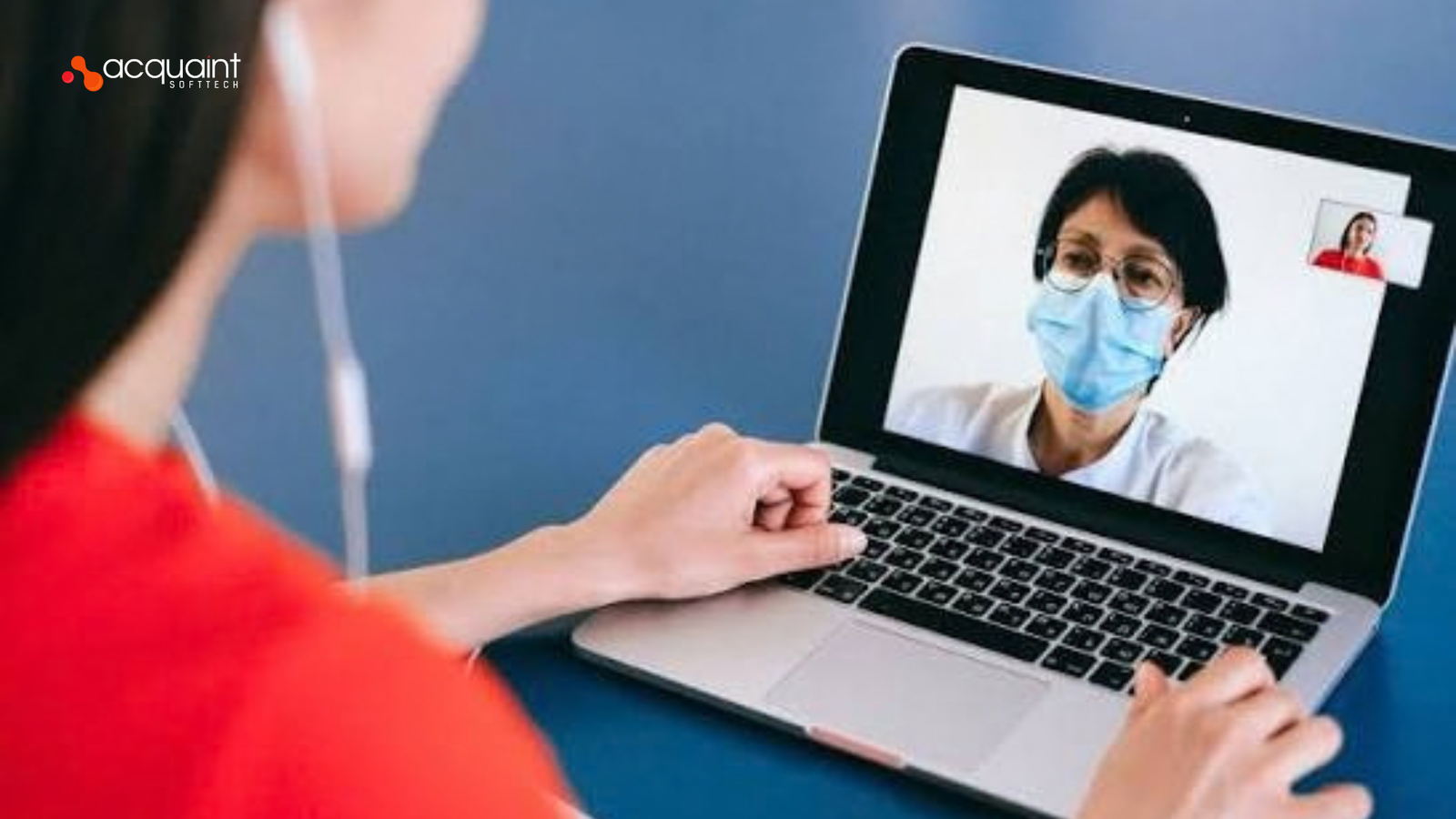

As the Founder and CEO of Acquaint Softtech, a company that builds dedicated software development teams for healthcare products, I have seen many telemedicine apps work perfectly in a city office and fail the moment a patient opens them on a farm with one bar of signal.
Rural telemedicine is not a smaller version of urban telemedicine. It is a different engineering problem, where the network is slow, unstable, and sometimes absent, and the app must still deliver care. This guide covers how to build for those conditions, from bandwidth budgets and adaptive video to store-and-forward, offline-first apps, SMS fallbacks, infrastructure, and cost.
The patients who most need remote care often have the worst connections, so a platform that only works on strong broadband quietly excludes them. The guidance below reflects how Acquaint Softtech designs connectivity-tolerant products as an ISO 27001 certified Official Laravel Partner, with 1,300+ projects and 70+ in-house engineers serving clients in the USA, UK, Europe, and Australia.
Why rural telemedicine breaks on weak networks
Rural telemedicine breaks on weak networks because most platforms assume a stable, high-bandwidth connection for live HD video. When bandwidth drops or the signal disappears, the call freezes, the session ends, and any unsaved clinical notes are lost.
The real problem is variability, not just speed
A steady slow connection is manageable. What breaks apps is a connection that swings between usable and dead within the same consultation, as the patient moves between rooms or a mobile tower becomes congested. Design for sudden drops and recoveries, not for a single average speed.
Designing around a bandwidth budget
A bandwidth budget is the maximum data rate each feature is allowed to use, decided before you build. It forces the team to rank features by clinical value, so the essential parts of a consultation keep working when the connection is poor.
| Consultation mode | Rough bandwidth need | When to use it |
| Audio-only call | Tens of kbps | Follow-ups, mental health, very weak signal |
| Low-resolution video | A few hundred kbps | Most rural consultations |
| HD video | Over 1 Mbps | Only when the connection clearly supports it |
| Store-and-forward | Near zero while waiting | Photos, forms, and notes sent when signal returns |
Rank features by clinical value
Voice matters more than video, and video matters more than screen sharing. When the budget shrinks, drop the least valuable stream first, and tell both the clinician and the patient what changed so nobody assumes the call has failed.
Adaptive video that degrades gracefully
Adaptive video automatically lowers resolution and frame rate as bandwidth falls, instead of freezing. WebRTC, the open standard behind most browser and app video calls, includes congestion control that estimates available bandwidth and adjusts the stream in real time.
Fall back in steps, not all at once
Move from HD to low resolution, then to a still image refreshed every few seconds, then to audio only. Each step keeps the consultation alive. When the connection recovers, climb back up gradually so a brief improvement does not trigger another freeze.
Audio-only is not a failure mode to hide. Medicare, for example, permanently allows audio-only telehealth for mental health care delivered at home, so a solid voice fallback is often a fully valid consultation.
Store-and-forward: care that does not need a live link
Store-and-forward telemedicine is an asynchronous model where the patient or a local health worker captures information, such as photos, symptoms, or readings, and the platform sends it to a clinician for review later. It needs no live connection at all during capture.
Compress and queue before you send
Resize images to the resolution a clinician actually needs, compress audio notes, and hold everything in an upload queue on the device. The queue sends in small chunks that can resume after an interruption, so a dropped connection never forces the patient to start again.
This model suits dermatology, wound care, and routine follow-ups especially well, because the clinician does not need to see the patient in real time to make a sound decision.
Offline-first apps for patients and field staff
An offline-first app treats the phone as the primary place data lives, and the server as somewhere it syncs to when possible. Patients and community health workers can complete forms, record observations, and view records with no signal, and nothing is lost.
Sync rules for clinical records
Store data in a local database, tag every change with a timestamp and device ID, and push changes through a sync queue when the network returns. Decide conflict rules in advance: for clinical notes, keep every version for review rather than letting the latest write silently overwrite an earlier one.
Cross-platform frameworks keep this affordable, because one codebase serves both Android and iOS, and React Native app development is a common choice for offline-first health apps that need local storage and background sync on both platforms.
SMS and voice fallbacks for basic phones
SMS and voice fallbacks reach patients who have a basic phone or no mobile data. They handle appointment reminders, simple triage questions, and callback requests, so the platform still serves people who cannot run an app.
Keep sensitive details out of text messages
Standard SMS is not encrypted end to end, so never include diagnoses, results, or medication details in a message. Send a neutral reminder or a secure link instead, and give patients a phone number they can call to speak with a clinician or an interactive voice menu.
Infrastructure closer to the patient
Infrastructure placed closer to rural patients shortens the distance data travels, which reduces delay and dropped packets. For video, that means media and relay servers in regions near your patients rather than a single data center far away.
Relay servers and realistic testing
Many rural networks block direct peer-to-peer calls, so video traffic needs TURN servers, which relay media when a direct connection is impossible. Teams that hire DevOps engineers can deploy and scale these relays by region and set up automated tests that simulate poor networks.
Test every release under throttled profiles that mimic rural conditions: low bandwidth, high latency, and packet loss. A build that only passes on office Wi-Fi has not really been tested for rural care.
Protecting data on devices that go offline
Offline-first apps keep health data on the device, so that device must be protected as carefully as the server. Encrypt local storage, require a PIN or biometric unlock, and support remote wipe for lost or shared phones.
Plan for shared devices
In many rural settings, one phone or tablet serves a whole family or a community health worker’s entire caseload. Separate user profiles, short session timeouts, and an audit log that syncs when the connection returns keep data protected under HIPAA in the US and GDPR in the UK and EU.
What it costs to build
The cost of a rural-ready telemedicine platform depends on how much offline capability you need and whether you add store-and-forward, SMS, and regional infrastructure. Adding adaptive video and audio fallback to an existing app is far cheaper than a full offline-first rebuild.
| Scope | What you get | Typical range (USD) |
| Low-bandwidth upgrade | Adaptive video, audio fallback, upload queue, network testing | $15,000 to $35,000 |
| Offline-first platform | Local database and sync, store-and-forward, SMS fallback, regional relays | $40,000 to $90,000 |
Start where patients drop off
Check where rural sessions fail today, usually at call start or mid-video, and fix that first with adaptive video and audio fallback. This staged approach runs at up to forty percent cost savings versus Western agencies, with blended rates of roughly twenty-five to forty-nine US dollars per hour.
Proof: an offline-first field app we shipped
Offline-first design is proven best in the field, where connectivity cannot be assumed. Acquaint Softtech built the mobile app for UptimeAI, a San Francisco company whose AI platform supports heavy-industry operations, used by field operators in remote plant areas with unreliable networks. The account below is drawn from the client’s 5.0 out of 5 Clutch review.
| Challenge | Solution | Result |
| Operators in remote areas lost connection during rounds | Offline functionality that records observations and syncs when the network returns | Issues identified at the machine instead of through delayed desktop checks |
| Critical alerts had to reach people in the field fast | Real-time alerting with the most urgent details shown first | Faster response to performance deviations |
| Sensitive enterprise data on mobile devices | Secure authentication tied to the platform’s identity management | Data stayed aligned with enterprise security protocols |
The team also ran field testing simulations under conditions similar to real sites, and restructured alert screens after operators explained they react to critical events before reviewing supporting data. Rural telemedicine needs the same discipline: capture offline, sync reliably, and show the most urgent information first.
See also: A More Comfortable Journey to Ahmedabad: What Business Travellers Should Know
Short FAQs
How can telemedicine work with poor internet?
Use adaptive video that lowers quality as bandwidth drops, with audio-only as a fallback. Add store-and-forward for photos and forms so care continues even without a live link.
What is store-and-forward telemedicine?
It is an asynchronous model where information like photos, symptoms, or readings is captured first and sent to a clinician for later review. It needs no live connection during capture.
What does offline-first mean in a health app?
The app saves data on the device first and syncs it to the server when a connection is available. Patients and health workers can keep working with no signal and lose nothing.
Is an audio-only consultation clinically acceptable?
For many visits, such as mental health care and routine follow-ups, yes. Medicare permanently allows audio-only telehealth for mental health care delivered at home.
Is it safe to store health data on a phone offline?
It can be, if local storage is encrypted, the app requires a PIN or biometric unlock, and lost devices can be wiped remotely. Shared devices also need separate user profiles.
How long does it take to make telemedicine rural-ready?
Adding adaptive video and audio fallback to an existing platform usually takes a few weeks. A full offline-first platform with sync and store-and-forward takes a few months.