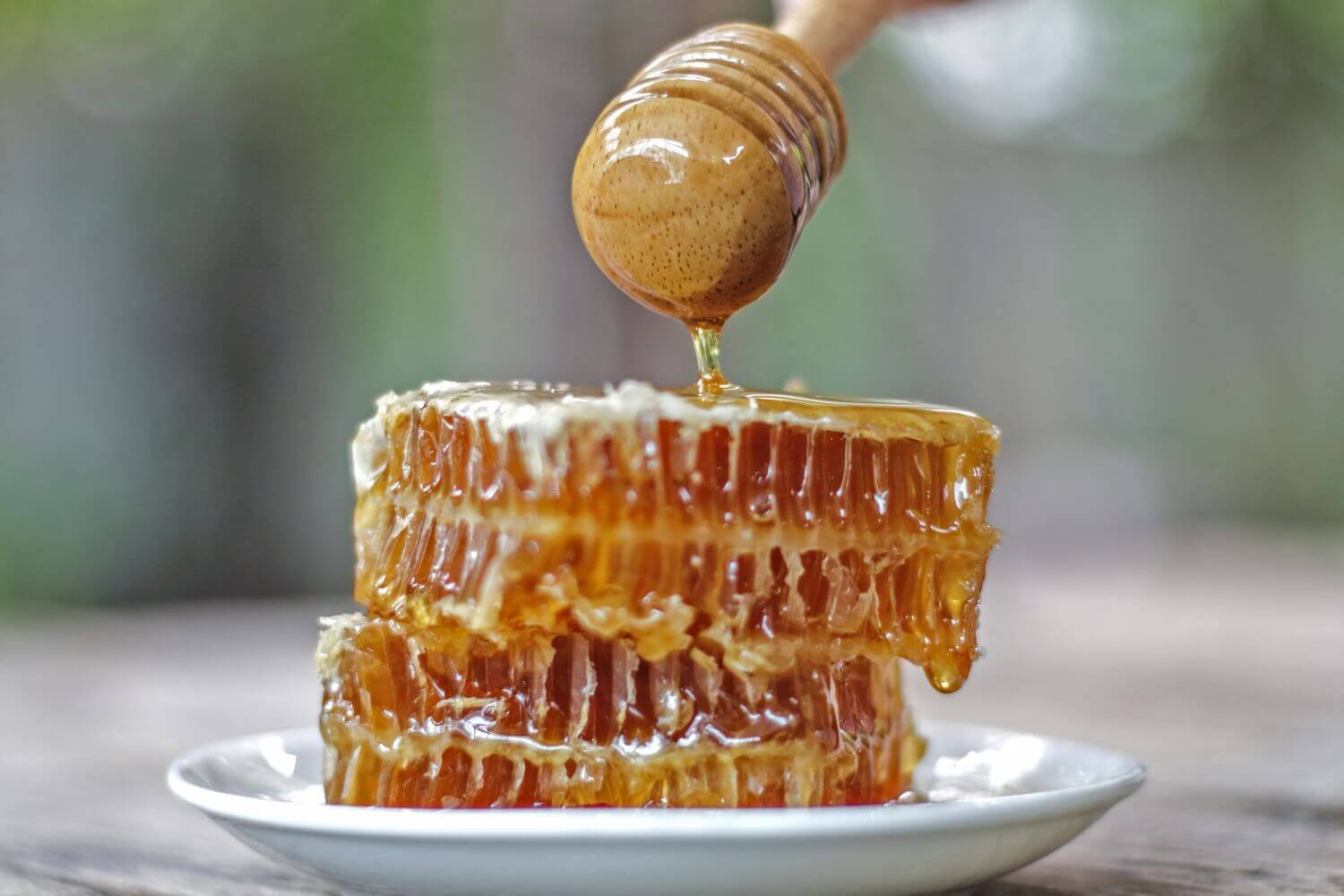

Opening a fresh piece of honeycomb feels like a treat until the first bite. The honey floods out quickly, and then a chewy, waxy lump is left behind, leaving many people unsure whether to swallow it, keep chewing, or quietly spit it out. The wax in raw honeycomb is edible, and swallowing it is safe for most people. Beeswax passes through the body undigested, much like the tough skins of some fruits and vegetables. Whether to swallow or discard the wax comes down to texture, thickness, and personal preference.
Is the Wax in Honeycomb Safe to Eat?
Yes, the wax in honeycomb is safe for most people to eat. Beeswax is a natural, non-toxic material bees produce to build the comb, and swallowing it with the honey is common, as is chewing and discarding it.
Beeswax is also an approved food ingredient in the United States. Federal rules list beeswax as a direct food substance affirmed as generally recognized as safe, with permitted levels such as 0.065% for chewing gum. The comb itself also holds small amounts of pollen and propolis alongside the raw honey stored inside the cells.
What Happens to Beeswax After You Swallow It
The human body cannot break down beeswax. Digestive enzymes have no effect on the long-chain fats and esters that make up the wax, which means swallowed pieces pass through the digestive tract largely unchanged.
That behavior is similar to insoluble fiber. Small amounts move through without causing problems for most people, and the wax adds no usable calories. Discomfort becomes more likely only when someone eats a large amount of wax at once.
How Bees Build the Comb
Knowing the comb’s origin explains why the wax is natural and soft. Worker bees build the structure in a series of steps:
- Producing wax: Young worker bees produce wax from glands on the underside of their abdomens after eating honey.
- Forming flakes: The wax appears as tiny, clear flakes that the bees collect and chew to soften.
- Shaping cells: Bees press the softened wax into six-sided cells that hold the most honey with the least material.
- Filling with nectar: The cells are filled with nectar, which the bees evaporate and convert into honey.
- Capping the cells: Once the honey is ready, bees seal the cells with a thin wax cap.
Freshly built comb is pale and tender, which makes it easier to chew and swallow than older, darker comb.
Chew, Swallow, or Spit?
There is no wrong way to handle the wax once the honey is gone. These two approaches cover most situations.
- Swallow the wax when the comb is thin and fresh, or when the honeycomb is spread on warm toast or mixed into other foods. Heat softens the wax, and other textures make the wax hard to notice.
- Chew and discard the wax when the comb is thicker or eaten on its own. Chewing releases the remaining honey, and the leftover wax can be removed much like chewing gum.
Ways to Eat Raw Honeycomb
Raw honeycomb works in sweet and savory settings. These are some of the most popular ways to enjoy the comb:
- On Warm Toast or Biscuits: Heat softens the wax and lets the honey melt into the bread, making the comb easy to eat whole.
- On a Cheese Board: Small squares pair well with sharp cheddar, blue cheese, or creamy goat cheese.
- In Yogurt or Oatmeal Bowls: A spoonful on top adds sweetness and a chewy texture.
- In Salads: Thin pieces add a sweet contrast to bitter greens, nuts, and fruit.
- In Drinks: A small square makes a striking garnish for tea or cocktails.
- Straight From the Package: Cut a small piece, chew, and enjoy the honey on its own.
Who Should Skip the Wax or the Comb
Honeycomb is safe for most people, though some groups should avoid the comb or limit the wax:
- Infants younger than 1 year
- People with bee or pollen allergies
- Anyone with trouble swallowing
- People with digestive conditions
- Those advised to limit sugar
Honeycomb carries the same infant rule as all honey, and parents are advised: do not feed honey to a child who is younger than 1 year old. Anyone with an allergy or medical condition should check with a doctor before trying the comb.
How Much Honeycomb Wax Is Too Much?
During a weekend brunch, a few small squares of honeycomb on toast or a cheese board add up to a modest amount of wax, and most people never notice any effect. Eating the comb this way, a little at a time with other foods, keeps the wax well within a comfortable amount.
Eating a large block of comb in one sitting is different. Since the wax is not digested, a large amount can feel heavy in the stomach and, in rare cases, cause discomfort or constipation. Treating honeycomb as a garnish or occasional treat, rather than a snack eaten by the block, keeps the experience pleasant.
What to Look for in Edible Honeycomb
Quality raw honeycomb tastes better and offers a more pleasant wax texture. Check for these signs before buying:
✓ Raw and never heated
✓ Pale, freshly built comb
✓ Fully capped cells
✓ Sealed, clean packaging
✓ Clear origin information
✓ No added syrups or sugars
Storing Honeycomb So the Wax Stays Pleasant
Proper storage keeps the comb fresh and the wax tender. Follow these simple dos and don’ts:
- Do keep honeycomb at room temperature in its sealed container.
- Do store the comb away from direct sunlight and moisture.
- Don’t refrigerate honeycomb, since cold temperatures harden the wax and speed crystallization.
- Don’t worry if the honey crystallizes, because the comb is still safe to eat and gentle warmth softens the texture.
Important FAQs
Does honeycomb wax have any flavor?
Honeycomb wax has very little flavor of its own. The taste comes from the honey stored inside the cells, and once the honey is chewed out, the remaining wax tastes mild and slightly waxy, with a soft, chewy texture.
Can kids eat honeycomb wax?
Yes, children older than one year can usually eat honeycomb wax in small amounts. Small pieces are easier to chew, and an adult should supervise. Honeycomb should never be given to babies younger than one year old.
Is honeycomb healthier than regular honey?
No, honeycomb is not dramatically healthier, but the honey inside is raw and unfiltered, keeping natural pollen, enzymes, and a small amount of propolis. Regular processed honey often loses some of these during heating and fine filtering.
Enjoying Honeycomb, Wax and All
The wax in raw honeycomb is edible, safe for most people, and passes through the body without being digested. Swallowing thin, fresh comb is perfectly fine, while chewing and discarding thicker wax is just as acceptable. Small portions on toast, cheese boards, and breakfast bowls make the comb easy to enjoy. Starting with fresh, raw comb from a trusted beekeeper keeps the wax tender and the honey full of natural flavor.
That trust starts at the family-owned apiary in Wewahitchka, Florida, where Smiley Honey has built a following for honeycomb that arrives exactly as the bees made it. The comb is unfiltered and unheated, keeping the high-pollen honey inside the cells untouched. For those who want liquid honey and comb together, the Honey and Comb Combo offers both in one order. The comb also makes a thoughtful gift, thanks to its premium, gift-ready presentation.
Browse the honeycomb collection, and reach out through the contact page if you have questions before placing your first order.
Read More: https://madubrainqu.com/what-minimum-order-do-most-bulk-honey-suppliers-require/